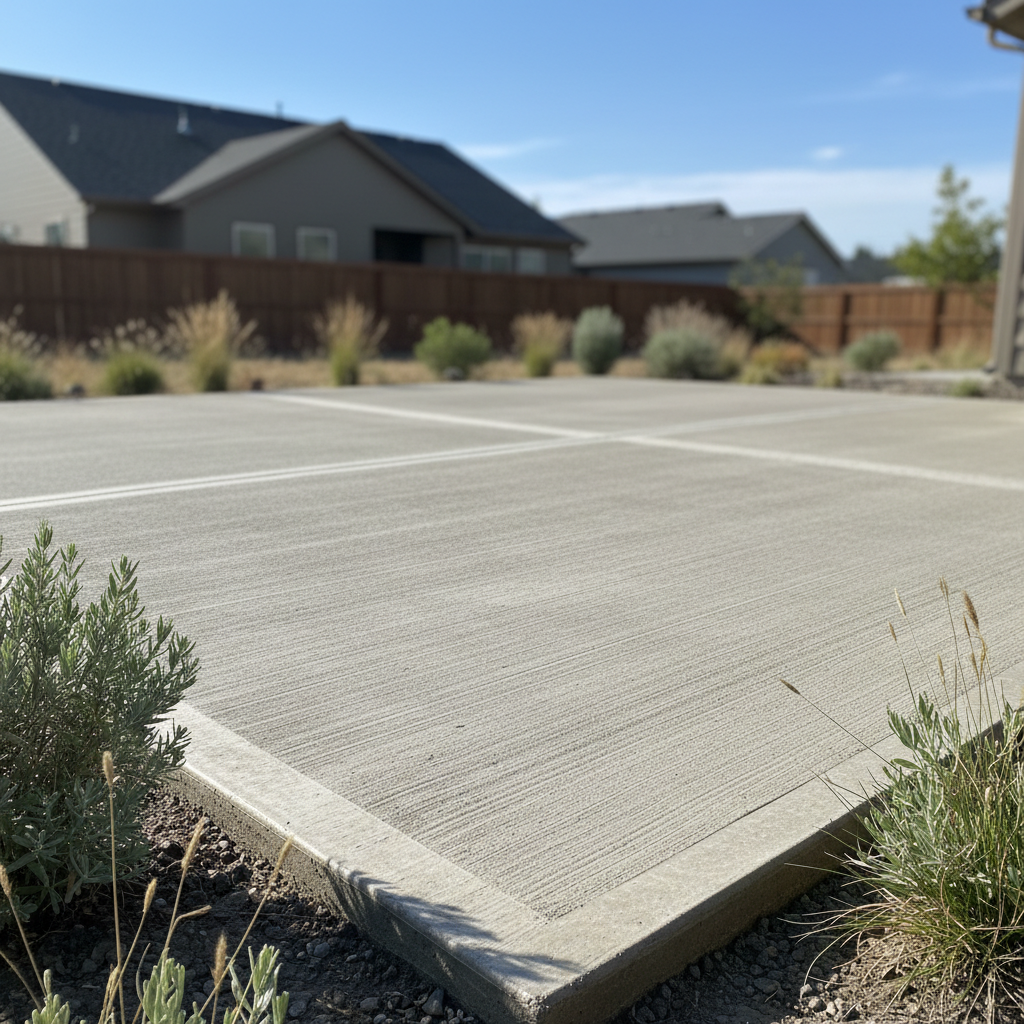
Pouring concrete looks deceptively easy on television, but anyone who has wrestled with a few yards of mud in a Richland backyard knows the reality. Between the scorching summer heat and the notoriously dry, sandy soil found around the South Richland hills, concrete does not forgive mistakes. If you are planning a new patio, driveway, or walkway this season, you need a solid plan before that truck rolls up your driveway.
Before the Pour: Prep Work and Permits
Getting ready is ninety percent of the job. If your sub-grade is not compacted right, that new slab will crack the first time heavy frost hits or the soil shifts. You have to dig down, clear out the organic topsoil, and bring in crushed rock. Here is a breakdown of what you can tackle yourself versus what requires backup:
- Demolition and hauling away old broken concrete, which is hard work that can be done with a rented jackhammer and a weekend.
- Setting up wooden forms and driving stakes to get your slopes right so water drains away from your foundation.
- Calling 811 to get utilities marked, and you should never skip this around the Tri-Cities.
- Excavating deep trenching or dealing with tricky utility lines, which should be left to the professionals.
Apex Concrete Solutions spends a lot of time fixing do-it-yourself pads where the homeowners skipped the proper compaction step. Richland soil can be shifty, so spending an extra day on your base saves you thousands of dollars down the road.
During the Pour: Beat the Clock
Once that mixer chute starts spinning, the clock is ticking loudly. Concrete waits for no one. If the temperature hits 95 degrees in July, the concrete starts setting up in minutes. You need a crew that knows how to screed, float, and edge before the surface dries out too fast.
Can you do a standard 10x10 backyard slab yourself? Yes, if you have three strong friends, the right tools, and plenty of water to mist the surface. But for anything larger than a small shed pad, trying to screed and finish solo is a disaster waiting to happen. If you are pouring a full driveway or an RV pad, save your back and hire professionals who have a power screed and a finisher's touch.
After the Pour: Curing is Everything
Most people think once the concrete is smooth and hard, the job is done. That is not the case. That is when the curing process starts, and it is an important part for long-term strength. Concrete does not dry; it undergoes a chemical reaction that requires moisture.
In the dry Tri-Cities climate, fresh concrete loses water far too fast. If you leave it exposed to the wind and sun without protection, the concrete will shrink and craze-crack all over the place. Keep the concrete wet for at least 5 to 7 days. Spray it down with a hose multiple times a day or place a curing blanket over it. Give the concrete a full week before you park any heavy vehicles on a new driveway, even if it feels hard to the touch after 48 hours.